ESC

What are you looking for?

ESC

What are you looking for?

Shopping cart

Your favorites

You have not yet added any recipe to your favorites list.

Browse recipes

Schedule your 15-minute demo now

We’ll tailor your demo to your immediate needs and answer all your questions. Get ready to see how it works!

0
0
×

School E-Shop

Setting Boundaries for Physical Contact

Maintaining clear, professional boundaries around physical contact is a core part of child protection in schools. While supportive physical gestures can build trust and reassurance, unclear or excessive contact can easily lead to misunderstandings, complaints, or serious safeguarding concerns. Every school should define what is appropriate and what is not—then train all staff to follow these standards consistently.

Appropriate Physical Contact: Supportive and Necessary

Certain types of physical contact are acceptable when done transparently, briefly, and in the best interest of the student:

  1. Handshakes and High-Fives
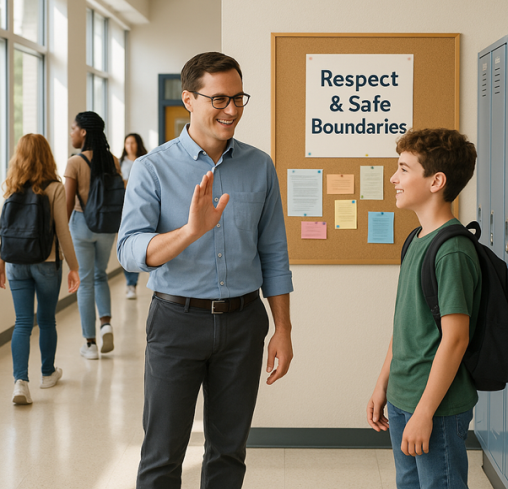
    Simple gestures like handshakes, high-fives, or a light tap on the shoulder can be positive ways to greet, motivate, or congratulate students—especially in public, visible settings.
  2. Assisting Students When Necessary
    Younger children or students with special needs may sometimes require help, such as tying shoelaces, guiding mobility equipment, or supporting balance. This should be:
    • Task-focused
    • As brief as possible
    • Done in a way that preserves the child’s dignity
  3. Emergency or Protective Contact
    When a student is at immediate risk—running onto a road, engaging in a dangerous act, or about to fall—staff are expected to intervene physically to prevent harm.
  4. Medical Assistance
    Administering first aid or helping a child experiencing a medical emergency is appropriate, following school health protocols and documentation requirements.

Inappropriate Physical Contact: Clear Red Lines

Schools must clearly prohibit:

  1. Hugging or Unnecessary Touching
    Even well-meant hugs, repeated patting, or close physical contact can be misread or make students uncomfortable, especially as they grow older.
  2. Forceful or Aggressive Contact
    Grabbing, pushing, shaking, or restraining a student without immediate safety reasons is unacceptable and may be considered abusive.
  3. Touching Sensitive Areas
    Any contact with private body parts is strictly prohibited under all circumstances, except where medically necessary and according to policy, with proper consent and documentation.
  4. Cultural or Personal Boundary Violations
    Some students, due to culture, religion, trauma history, or personal preference, may not want physical contact at all. Their boundaries must be respected.

Handling Grey Areas: Reducing Ambiguity

To avoid confusion:

  • Adopt a “no-contact unless necessary” or “minimal contact” approach as a standard.
  • Encourage staff to seek verbal consent before any non-emergency physical contact (e.g., “Is it okay if I help you up?”).
  • Train staff to use open, visible spaces and avoid one-on-one physical interactions in secluded areas.
  • Document incidents where protective or medical contact was required.

School leaders should review their child protection and staff conduct policies to ensure physical contact guidelines are explicit, communicated, and regularly reinforced. Clear boundaries protect students, support staff professionalism, and help create a safe, trusting environment for learning.

Prev Article
Understanding the Importance of Physical Contact Policies in Schools
Next Article
Implementing and Enforcing Physical Contact Policies in Schools

Related to this topic:

rocket-icon rocket-icon rocket-icon

Learn What Makes Schools Truly Safe

Receive safety guides, policy updates, and best practices from global experts.

We care about your Personnel Data. Please check Privacy Policy