ESC

What are you looking for?

ESC

What are you looking for?

Shopping cart

Your favorites

You have not yet added any recipe to your favorites list.

Browse recipes

Schedule your 15-minute demo now

We’ll tailor your demo to your immediate needs and answer all your questions. Get ready to see how it works!

0
0
×

School E-Shop

Comprehensive School Emergency Preparedness

Schools are more than learning spaces—they are communities responsible for the safety of every child and adult on campus. A comprehensive emergency preparedness plan ensures that when a crisis occurs, the response is calm, coordinated, and effective rather than chaotic and improvised.

A strong plan begins with a thorough risk and hazard assessment. Each school must identify the threats most relevant to its location and context: earthquakes, floods, fires, severe storms, or human-caused incidents such as active shooters, bomb threats, or chemical spills. This assessment forms the basis for customized procedures rather than one-size-fits-all checklists.

Once risks are understood, the school should develop a clear, written emergency preparedness plan. This document needs to outline step-by-step actions for different scenarios, including evacuation, lockdown, shelter-in-place, and post-incident reunification with families. Clear communication protocols are essential: who makes decisions, how information flows to staff and students, and how parents are notified through calls, SMS, apps, or public announcements.

Training turns plans into practical action. All staff must know their roles—who leads evacuation, who checks bathrooms, who manages first aid, and who communicates with emergency services. Regular drills for fire, lockdown, and other scenarios help staff and students practice these routines until they become familiar. Drills should be age-appropriate, reassuring, and framed as “practice to stay safe,” not as fear-inducing exercises.

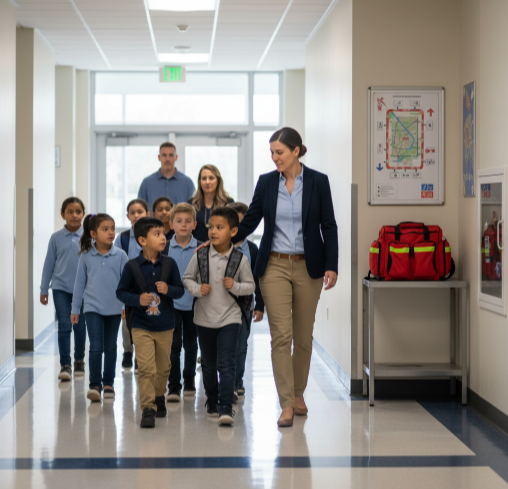
Physical and infrastructural measures reinforce preparedness. Security cameras, controlled access points, reinforced doors, and clearly marked exits support both prevention and response. Every campus should maintain accessible emergency kits containing first-aid supplies, water, flashlights, batteries, blankets, and basic hygiene items. These kits should be checked and replenished regularly.

Equally important is equipping staff with essential skills. Training in basic first aid, CPR, bleeding control, and psychological first aid significantly improves a school’s capacity to stabilize situations until professional responders arrive. Knowing how to support distressed children emotionally after an incident is as critical as the immediate physical response.

Preparedness is not a one-time project. Schools should review and update their emergency plans at least annually—or after any major drill or real incident. Feedback from staff, students, and local emergency services can highlight gaps and improvements. As risks evolve and technology advances, plans, equipment, and communication methods must be refreshed.

Ultimately, comprehensive emergency preparedness builds a culture of safety, not fear. When schools plan thoroughly, train regularly, and review consistently, they reduce disruption, protect lives, and provide parents and communities with confidence that their children are learning in a safe, well-prepared environment.

Prev Article
Supporting Students Affected by Gang Involvement A School’s Role
Next Article
Building Safer Schools: Prevention, Response, and Recovery Strategies

Related to this topic:

rocket-icon rocket-icon rocket-icon

Learn What Makes Schools Truly Safe

Receive safety guides, policy updates, and best practices from global experts.

We care about your Personnel Data. Please check Privacy Policy