ESC

What are you looking for?

ESC

What are you looking for?

Shopping cart

Your favorites

You have not yet added any recipe to your favorites list.

Browse recipes

Schedule your 15-minute demo now

We’ll tailor your demo to your immediate needs and answer all your questions. Get ready to see how it works!

0
0
×

School E-Shop

Making School Washrooms Truly Safe

Washroom safety is one of the most underestimated aspects of school safety planning. While schools invest heavily in classroom supervision and Playground security, washrooms often become unsupervised spaces where bullying, vandalism, and risky behavior can occur. A safe washroom environment is directly linked to students’ physical health, emotional well-being, and learning readiness.

Why Washroom Safety Matters

Washrooms can quickly turn into hotspots for unsafe behavior:

  • Physical safety risks:
    Unmonitored washrooms may enable bullying, harassment, or inappropriate behavior. Slippery floors, broken locks, poor lighting, or damaged fixtures can also lead to preventable injuries. Without clear emergency protocols for incidents in or near washrooms, students may feel unsafe using them.
  • Psychological impact on students:
    When students fear bullying or embarrassment in washrooms, they may avoid using them altogether. This can lead to discomfort, reduced concentration in class, and in some cases health issues such as urinary tract infections (UTIs). Consistently dirty or vandalized washrooms also damage students’ perception of the school’s overall safety and hygiene standards.
  • Real-life examples:
    • In a high school in New York, periodic washroom checks were introduced after repeated bullying and vaping incidents. Within months, reported cases dropped by around 40%, showing how simple supervision can change behavior.
    • A school in the UK tackled severe washroom vandalism by adding CCTV outside entrances and increasing teacher presence in nearby corridors. This approach led to a 70% reduction in damages while still protecting student privacy.

What a Strong Washroom Safety Policy Should Include

Schools can strengthen washroom safety by building clear, practical systems:

  • Regular inspections:
    Daily or scheduled checks for cleanliness, broken fixtures, lighting, and floor safety, with a simple checklist and a logbook.
  • Surveillance with privacy in mind:
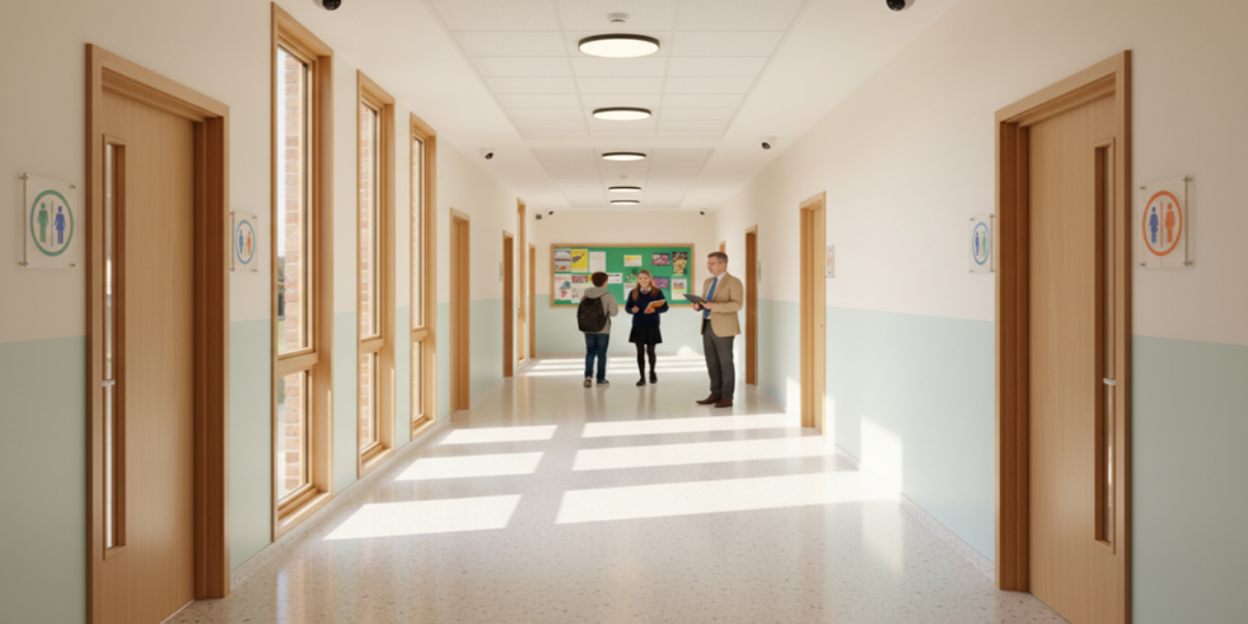
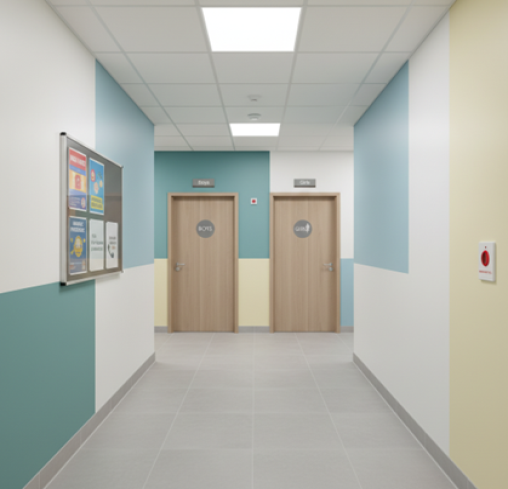
    CCTV cameras only at entrances and corridors near washrooms—never inside. Visible cameras act as a deterrent while maintaining dignity and privacy.
  • Staff supervision:
    Rotational monitoring where teachers or support staff periodically walk past washroom zones during breaks, arrival, and dispersal times.
  • Reporting mechanisms for students:
    Anonymous boxes, QR-code forms, or digital reporting systems so students can safely report bullying, vandalism, or unsafe conditions without fear of retaliation.

Challenges—and How to Address Them

Schools often worry about balancing privacy with safety, managing tight budgets, and handling student resistance to increased monitoring. The key is transparency: clearly explain to students and parents what is being monitored, why it matters, and how privacy is protected. Start with low-cost steps like better supervision, simple repair systems, and student awareness campaigns.

Washroom safety should be a core part of every school’s safety and wellbeing policy—not an afterthought. School leaders, facility managers, and teachers can work together to review current washroom practices, update policies, and involve students in creating respectful, safe, and hygienic spaces for everyone.

Prev Article
The Hidden Harm of Cyberbullying: How Schools Can Protect Students Online
Next Article
Developing and Implementing an Effective School Washroom Safety Policy

Related to this topic:

rocket-icon rocket-icon rocket-icon

Learn What Makes Schools Truly Safe

Receive safety guides, policy updates, and best practices from global experts.

We care about your Personnel Data. Please check Privacy Policy