ESC

What are you looking for?

ESC

What are you looking for?

Shopping cart

Your favorites

You have not yet added any recipe to your favorites list.

Browse recipes

Schedule your 15-minute demo now

We’ll tailor your demo to your immediate needs and answer all your questions. Get ready to see how it works!

0
0
×

School E-Shop

Sustainable HVAC for Smarter Schools

Energy efficiency and sustainability are no longer “nice-to-have” features in school HVAC systems—they are essential. Schools today are expected to provide safe, healthy, and comfortable learning environments while managing tight budgets and meeting environmental responsibilities. Well-designed, energy-efficient HVAC systems help achieve all three.

Modern HVAC solutions focus on using less energy to deliver better comfort and cleaner air. Traditional systems often run at full capacity regardless of occupancy, wasting energy and driving up costs. In contrast, energy-efficient systems use smart controls, better equipment, and thoughtful building design to match heating, cooling, and ventilation to real needs.

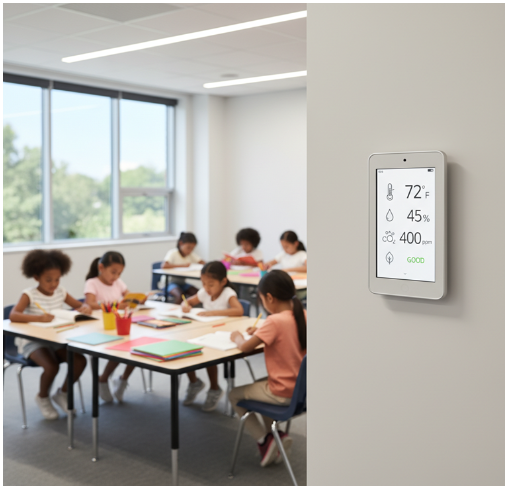
Smart controls are a powerful first step. Programmable thermostats and building management systems can automatically adjust temperatures based on the school timetable and occupancy. Classrooms, halls, and offices are conditioned only when needed, reducing unnecessary energy use. Motion and CO₂ sensors can detect when rooms are empty or underused, allowing systems to slow down or switch off while still maintaining indoor air quality.

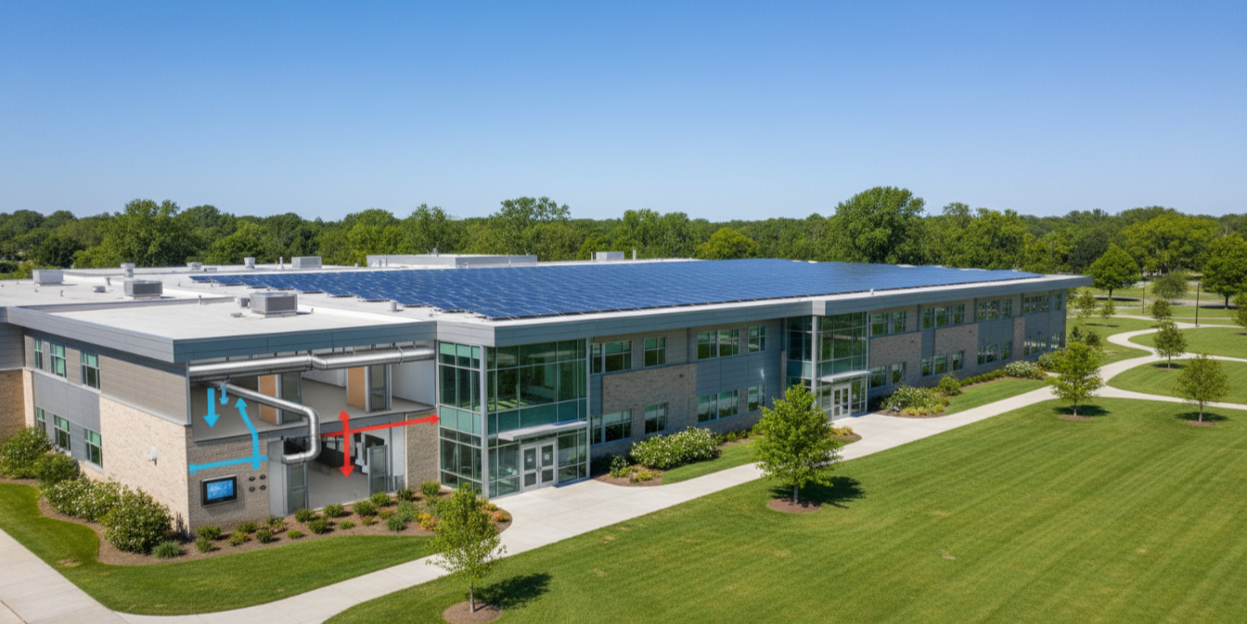
Renewable energy adds another layer of sustainability. Solar panels can power HVAC systems, reducing dependence on grid electricity. Geothermal systems use the earth’s stable temperature to heat and cool buildings more efficiently than conventional systems. These technologies may require planning and investment, but they significantly cut long-term energy bills and carbon emissions.

Retrofitting is especially important for older school buildings. Upgrading to high-efficiency boilers, chillers, variable refrigerant flow (VRF) systems, and energy recovery ventilators (ERVs) can dramatically reduce energy consumption without rebuilding from scratch. ERVs, for example, capture energy from exhaust air and use it to pre-condition fresh air, improving both comfort and efficiency.

Sustainability also starts with design. Good insulation, airtight construction, shading devices, and effective natural ventilation reduce the load on HVAC systems. When a building gains or loses less heat, the system works less hard, saving energy and extending equipment life.

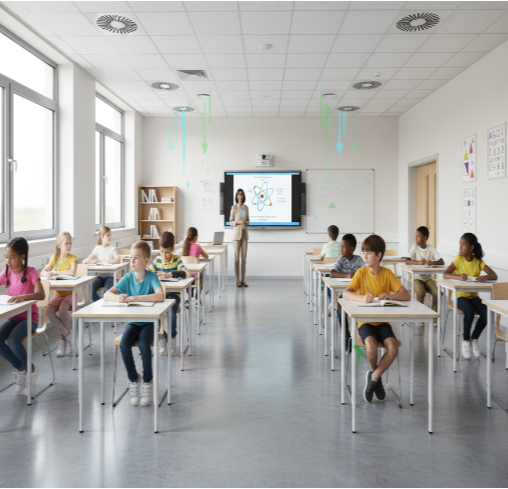
The benefits go beyond the utility bill. Energy-efficient HVAC systems often include better filtration and controlled ventilation, which improve indoor air quality—crucial for student health, attendance, and concentration. Lower operating costs free up funds for teachers, learning materials, and student programs. Environmentally responsible schools also model climate-conscious behavior for students.

Cost and expertise can be barriers. Advanced systems require upfront investment and trained staff to operate and maintain them. To address this, schools can explore government incentives, green building grants, and partnerships with energy service companies. Working with qualified HVAC professionals ensures correct design, installation, and long-term performance.

For school leaders, the message is clear: investing in energy-efficient, sustainable HVAC is not just a facilities decision—it is a student well-being, budget, and climate decision. Thoughtful choices today can create safer, healthier, and more sustainable learning environments for years to come.

Prev Article
School Safety in 2025: What the Data Says and How Schools Can Respond
Next Article
The Importance of Regular HVAC Maintenance in Schools

Related to this topic:

rocket-icon rocket-icon rocket-icon

Learn What Makes Schools Truly Safe

Receive safety guides, policy updates, and best practices from global experts.

We care about your Personnel Data. Please check Privacy Policy