ESC

What are you looking for?

ESC

What are you looking for?

Shopping cart

Your favorites

You have not yet added any recipe to your favorites list.

Browse recipes

Schedule your 15-minute demo now

We’ll tailor your demo to your immediate needs and answer all your questions. Get ready to see how it works!

0
0
×

School E-Shop

Modern HVAC for Safer Schools

Modern HVAC systems are quietly becoming one of the most important safety tools in schools. They no longer just heat and cool classrooms—they now play a critical role in indoor air quality, student health, and energy efficiency.

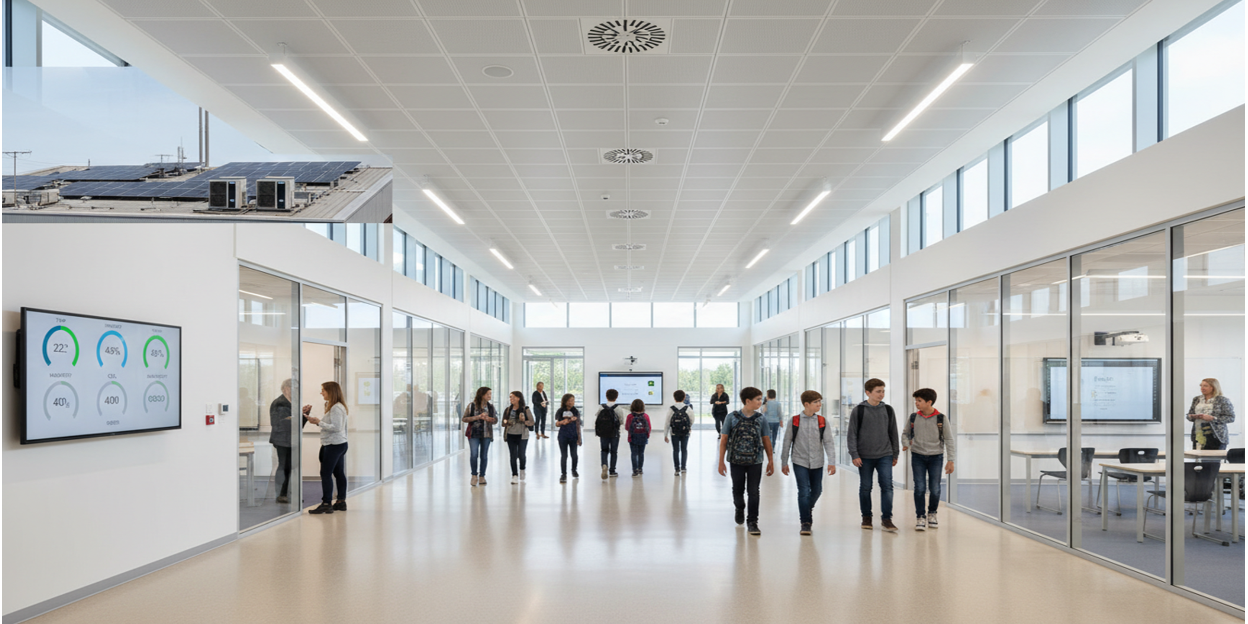
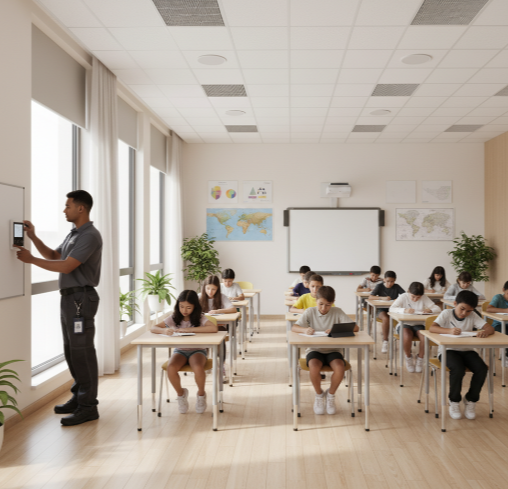
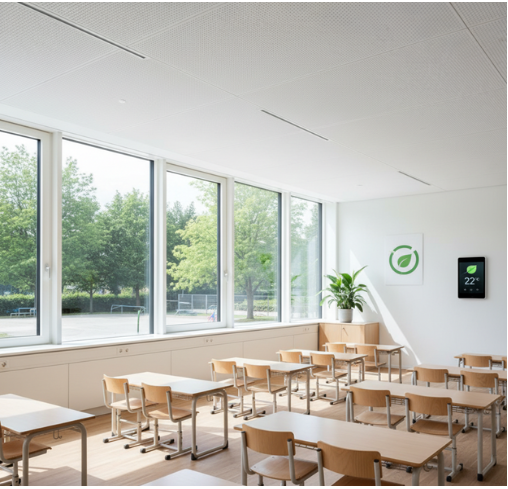
Today’s systems are increasingly “smart.” Using sensors and IoT (Internet of Things) technology, modern HVAC can monitor temperature, humidity, CO₂ levels, and overall air quality in real time. Smart thermostats and controls adjust settings automatically based on occupancy and usage patterns. For example, classrooms can reduce airflow and temperature during evenings, weekends, or holidays, then return to optimal comfort before students arrive. This not only keeps environments stable and comfortable but also helps schools cut unnecessary energy use.

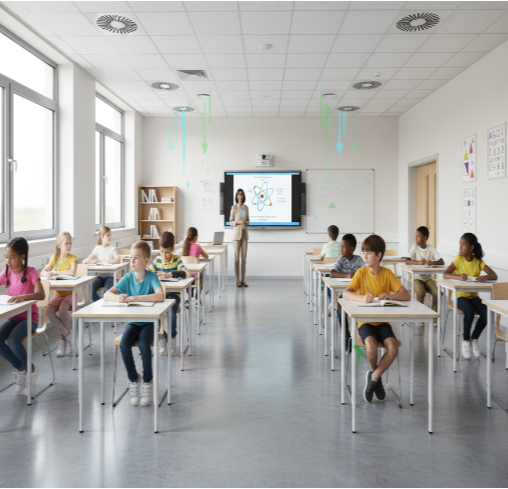
Advanced filtration and purification are another major step forward. High-efficiency particulate air (HEPA) filters capture fine particles, while UV‑C light technology can help inactivate certain bacteria and viruses inside HVAC units. For schools, this means cleaner air in classrooms, hallways, libraries, and cafeterias—supporting fewer absences due to illness and better conditions for students with asthma or allergies.

Ventilation has also evolved. Energy recovery ventilators (ERVs) and heat recovery ventilators (HRVs) allow schools to bring in fresh outdoor air without wasting energy. These systems transfer heat (and sometimes moisture) between outgoing and incoming air streams, reducing the load on heating and cooling equipment. The result is better ventilation, more consistent air quality, and lower utility bills.

For schools with long-term sustainability goals, geothermal HVAC offers a powerful option. By using the earth’s relatively stable underground temperature, geothermal systems can provide heating and cooling with significantly reduced energy consumption and emissions. While installation costs are higher, the long-term operational savings and environmental benefits can be substantial—especially for new school buildings or major renovations.

Some schools are also integrating renewable energy, such as solar-powered air-conditioning units or rooftop solar feeding into HVAC systems. This approach reduces dependence on non-renewable energy and showcases environmental leadership to students and the community.

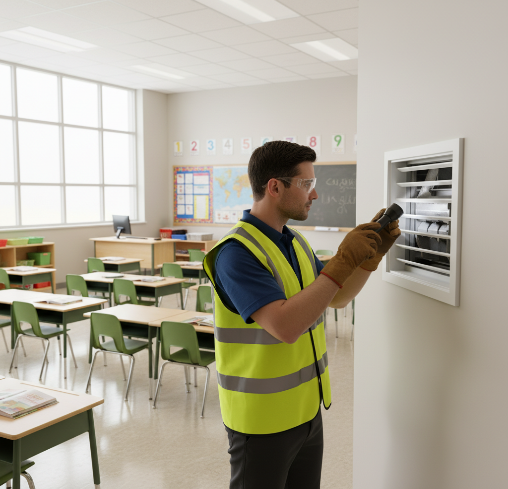
However, these technologies do come with challenges. High upfront investment, ongoing maintenance needs, and the requirement for skilled technicians can be difficult for underfunded schools. This is where planning and partnerships matter. Exploring government incentives, grants, and collaborations with private organizations or energy-service companies can help finance upgrades and training.

For school leaders, the message is clear: modern HVAC is not just a technical upgrade—it is a safety, health, and learning investment. By prioritizing smart controls, strong filtration, efficient ventilation, and sustainable energy options, schools can create cleaner, safer, and more comfortable environments where students and staff can thrive.

Now is the time for schools to review their HVAC systems, identify gaps, and plan a phased upgrade strategy that supports both safety and sustainability.

Prev Article
The Importance of Regular HVAC Maintenance in Schools
Next Article
How Strong HVAC Policies Create Safer, Healthier Schools

Related to this topic:

rocket-icon rocket-icon rocket-icon

Learn What Makes Schools Truly Safe

Receive safety guides, policy updates, and best practices from global experts.

We care about your Personnel Data. Please check Privacy Policy