ESC

What are you looking for?

ESC

What are you looking for?

Shopping cart

Your favorites

You have not yet added any recipe to your favorites list.

Browse recipes

Schedule your 15-minute demo now

We’ll tailor your demo to your immediate needs and answer all your questions. Get ready to see how it works!

0
0
×

School E-Shop

HVAC Policies in Safer Schools

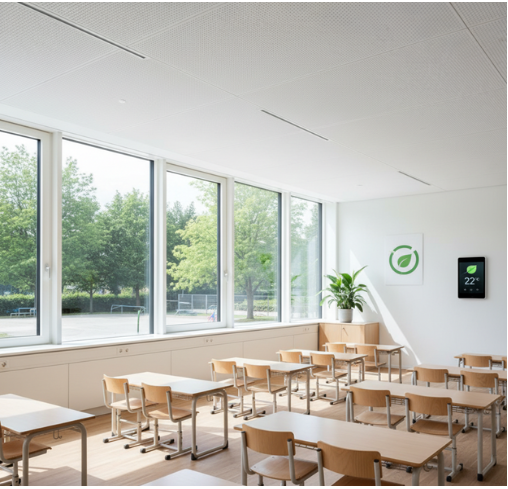
Effective HVAC (Heating, Ventilation, and Air Conditioning) policies are no longer a “nice to have” for schools—they are a core part of health, safety, and learning quality. Well-designed policies give clear direction on how HVAC systems are planned, installed, operated, and maintained in educational environments.

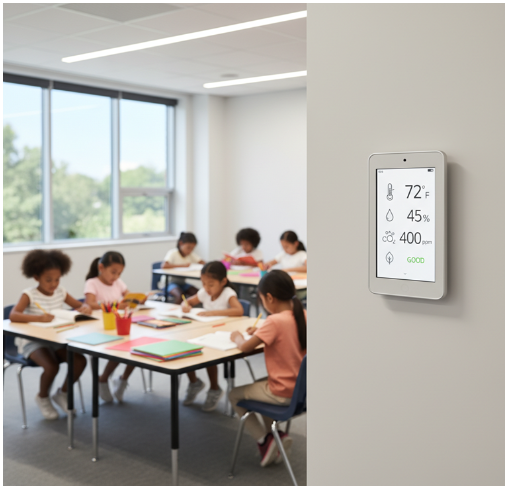
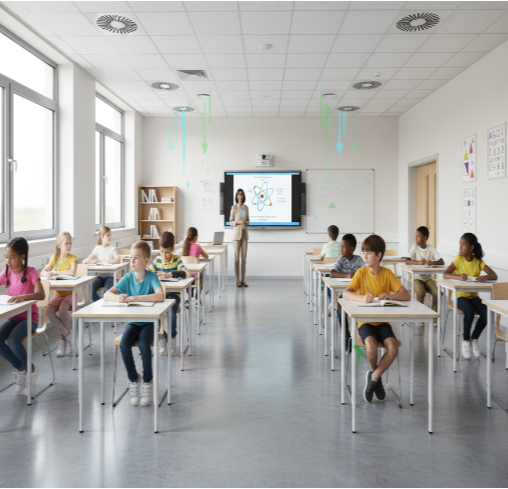
Strong HVAC policies start with indoor air quality (IAQ). They define standards for ventilation rates, filtration levels, and humidity control suited to classrooms, libraries, labs, and early childhood spaces. Many schools now specify higher-efficiency filters (such as HEPA or equivalent) to capture fine particles, dust, and allergens, and may include UV‑C or similar technologies to reduce airborne pathogens. These measures directly support student and staff health by reducing respiratory issues and limiting the spread of colds, flu, and other infections.

Energy efficiency is another essential component. HVAC systems are among the largest energy consumers on a campus. Policies that promote smart thermostats, programmable schedules, energy recovery ventilators, and, where possible, integration with renewable energy sources help schools lower utility bills and shrink their carbon footprint. Done well, this does not compromise comfort; instead, it ensures the right temperature and fresh air at the right time, in the right spaces.

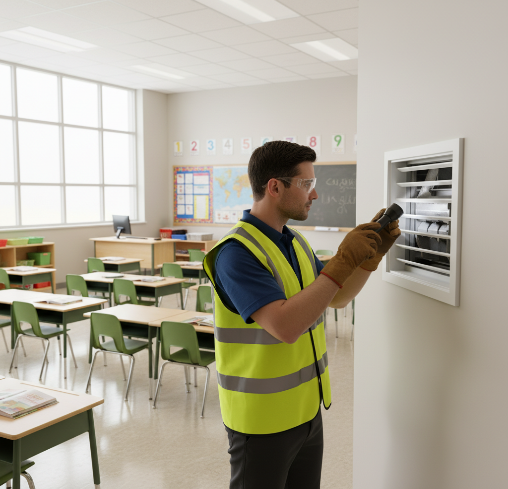
Regular maintenance is where many schools either succeed or struggle. Clear policies should spell out inspection frequencies, filter change intervals, cleaning routines, and annual tune‑ups. For example, monthly or quarterly filter checks and documented yearly servicing can prevent breakdowns, extend equipment life, and avoid sudden failures in extreme weather.

Safety must be built into HVAC policies as well. This includes addressing potential gas leaks, electrical faults, and fire risks by requiring appropriate sensors, alarms, and automatic shutdown procedures. Emergency protocols—such as safely shutting down systems to prevent smoke spread during a fire—should be aligned with the school’s broader emergency response and practiced through drills.

Successful implementation depends on collaboration. School administrators, facilities managers, and HVAC professionals need to work together to tailor policies to each site’s design, climate, occupancy patterns, and budget. Training custodial and maintenance staff on IAQ basics, system operation, and early warning signs of problems is critical.

The impact of good HVAC policies goes beyond safety. Classrooms with clean air and stable temperatures support better concentration, fewer headaches, reduced absenteeism, and improved academic performance. At the same time, energy‑efficient operations support sustainability goals and demonstrate environmental responsibility to students and the community.

While costs and resistance to change can be real barriers—especially in older buildings—schools can explore government funding, grants, and public–private partnerships to support upgrades. Step-by-step implementation, starting with the highest‑risk buildings or spaces, can make progress manageable.

Ultimately, clear HVAC policies are an investment in student well‑being, staff comfort, and the long‑term health of the school environment.

Prev Article
Modern HVAC Technologies Making Schools Healthier, Safer, and More Efficient
Next Article
Spotting Hidden Dangers Common Playground Hazards Schools Must Address

Related to this topic:

rocket-icon rocket-icon rocket-icon

Learn What Makes Schools Truly Safe

Receive safety guides, policy updates, and best practices from global experts.

We care about your Personnel Data. Please check Privacy Policy